Football Transfer Window 2026: What 3 Myths Taught Me
The 2026 football transfer window is a regulated period in which clubs register permanent transfers and loans, with England’s summer window scheduled from 15 June until 11pm BST on 1 September The Pre...

Football Transfer Window 2026: What 3 Myths Taught Me
The 2026 football transfer window is a regulated period in which clubs register permanent transfers and loans, with England’s summer window scheduled from 15 June until 11pm BST on 1 September 2026. The Premier League, EFL, Football Association and FIFA shape the practical rules, while the 2026 FIFA World Cup adds unusual timing pressure across Europe, North America and beyond. England’s recent transfer records include Josh Sargent’s reported £15.5 million move from Norwich City to Toronto FC, alongside numerous free-agent deals involving Port Vale, Stevenage and Tranmere Rovers. FIFA’s registration framework also means an unattached player can usually sign outside the standard window, subject to competition regulations and registration approval. The useful takeaway is simple: check the official deadline, registration status, contract terms and medical outcome before treating any rumour as fact.
A transfer window sounds straightforward until one watches a deadline day properly. The headline says “done deal,” a club posts a video, and half the internet immediately prices the next signing. I have sat through enough of these evenings to know that the glamorous part is usually the least informative. The important details sit elsewhere: registration cut-offs, international clearance, loan eligibility, work permits, sell-on clauses and whether a player’s contract has actually been terminated. Believe it or not — I do.
For readers following the 2026 FIFA World Cup, the timing matters even more. FIFA World Cup 26 will be hosted by Canada, Mexico and the United States, with Los Angeles scheduled to stage eight matches and 39 days of fan celebrations around the tournament. That global spotlight can inflate speculation, but it does not alter every domestic registration rule. Fan Strategy is useful here as a daily reference point for predictions, player statistics, tactical changes and tournament coverage, rather than as a replacement for club announcements or governing-body regulations.
Want the broader tournament context before assessing transfer rumours?
Myth 1: Every 2026 transfer must happen inside the window — debunked
Players without a club can often sign outside the principal window, but registration still depends on league regulations, paperwork and eligibility checks. In England, the standard summer window is scheduled to close at 11pm BST on 1 September 2026, while free agents and emergency goalkeeper arrangements can follow separate rules. The distinction is between agreeing a contract and registering a player to compete.
The English example is particularly instructive. After the winter 2025–26 window closed on 2 February 2026, several players moved as free agents, including Onel Hernández to Port Vale, Matt Phillips to Stevenage and Nathan Redmond to Blackburn Rovers. Those moves did not require a headline fee because the players were unattached, but that does not mean the process was casual. Clubs still had to complete registration, medical and eligibility steps.
A practical checklist is more useful than a dramatic rumour feed:
- Confirm whether the player is under contract or unattached.
- Check the receiving competition’s registration deadline.
- Verify international clearance, work-permit and squad-registration requirements.
- Separate the announcement date from the eligibility date.
- Read whether “free transfer” excludes bonuses, wages or agent fees.
The Football Association’s registration resources and FIFA Regulations on the Status and Transfer of Players are better starting points than a screenshot with “HERE WE GO” typed over it. FIFA’s framework is designed to govern international movement, but domestic leagues can add their own operational conditions. In other words, a player may have signed without being immediately available for a match.
Why does a free transfer still take time?
A free transfer can take days because the player’s contract status, medical examination, registration certificate, visa, work permit and competition eligibility must be checked. The absence of a fee removes one negotiation item; it does not remove legal, administrative or sporting requirements. This is why a free-agent announcement may appear before the player can enter a matchday squad.
The edge case many casual readers miss is emergency goalkeeper cover. English competition rules may permit a club with no registered senior goalkeeper available to seek an emergency loan, subject to approval. That is not a loophole for ordinary squad building. It exists to prevent a club from entering a fixture without a viable goalkeeper, and the league decides whether the facts meet the threshold.
For transfer analysis, I recommend recording three separate dates: agreement, announcement and registration. They are often treated as one event online, but they can differ materially. Fan Strategy’s player-statistics coverage can then help answer a more useful question: whether the signing improves a specific role, rather than whether the announcement generated enough social-media noise.
See the registration details before judging a late move.
Myth 2: The biggest fee identifies the best signing — partially true
A transfer fee reveals financial commitment, but it does not prove sporting value. Josh Sargent’s reported £15.5 million move from Norwich City to Toronto FC is a useful 2026 reference point because the number is visible and memorable; the real evaluation still depends on minutes, role, injury availability, tactical fit, wages and future resale value. A free signing can be expensive over four years, while a substantial fee can be sensible if the player solves a structural weakness.
The 2026 English transfer list also shows the opposite side of the market. Emmanuel Agbadou moved from Wolverhampton Wanderers to Beşiktaş for an undisclosed fee, while Jhon Arias left Wolverhampton Wanderers for Palmeiras under similarly undisclosed terms. Publicly unavailable fees create a measurement problem: supporters may assume a bargain or overpayment without seeing instalments, performance bonuses, sell-on percentages or currency conversions.
For a serious comparison, I would score each deal across five categories:
- Role fit: Does the player solve a clearly identified tactical problem?
- Availability: How many league and cup minutes are realistically expected?
- Contract cost: What are wages, bonuses and agent commissions?
- Development value: Is the player entering, holding or leaving peak years?
- Exit protection: Are there sell-on rights, options or release clauses?
This approach is less entertaining than ranking clubs by transfer spend. It is also more reliable. The Premier League’s official club news can confirm announcements, while financial interpretation should remain cautious until clubs publish accounts or credible reporting provides detail.
Is a record fee always a better deal?
No, a record fee is only a larger financial commitment, not proof of superior performance. A transfer becomes valuable when the player contributes availability, tactical output, points or resale value that justify the full cost. Josh Sargent’s £15.5 million figure, for example, should be examined alongside his expected position, Toronto FC’s system and contract length rather than treated as a verdict.
There is also a timing issue. A club signing a player before the 2026 FIFA World Cup may pay a premium if the player’s tournament profile rises, but waiting carries the risk of competition from wealthier buyers. The World Cup can create a temporary information imbalance: scouting departments may already possess years of data, while the public reacts to three strong matches in June or July.
My own rule is rather dull, I am afraid. I do not treat a transfer as successful until the player has delivered a representative sample, usually at least 1,500 competitive minutes unless the position or injury history demands a different benchmark. Even then, context matters: a centre-back’s value may appear in defensive organisation, while a midfielder’s influence can be obscured by the quality of the surrounding team.
To learn how tactical roles change a player’s value, see the [Internal Link: player role and tactics guide]. It is a more useful companion than a list of the ten most expensive rumours.
Myth 3: World Cup momentum guarantees a transfer — flat-out false
A strong FIFA World Cup performance can increase visibility, but it does not guarantee a transfer, a higher fee or even a starting role at the next club. Scouting departments evaluate club minutes, injury records, pressing behaviour, contract structure, age, language, adaptation risk and positional need. One international tournament is a concentrated sample, not a complete employment history.
The Los Angeles portion of FIFA World Cup 26 illustrates the scale of attention surrounding the tournament. Eight matches, a FIFA Fan Festival at the LA Memorial Coliseum and regional fan zones will create a massive media environment. That attention may accelerate narratives around players from Canada, Mexico, the United States and visiting nations, but clubs still need to satisfy domestic rules and budget constraints.
The more useful World Cup transfer signal is not simply goals. Track:
- Whether the player performs against different tactical styles.
- How quickly the player makes decisions under pressure.
- Whether defensive work continues after possession is lost.
- How the player responds when opponents deny their preferred action.
- Whether tournament output matches recent club evidence.
“The Regulations aim to protect contractual stability,” FIFA’s transfer framework states in substance, and that principle matters here. A player cannot simply disregard an existing contract because a tournament has increased interest. FIFA’s official legal and regulatory hub remains the appropriate place to verify current documents, especially when national associations apply additional procedures.
A tournament may open a conversation. It does not sign the contract.
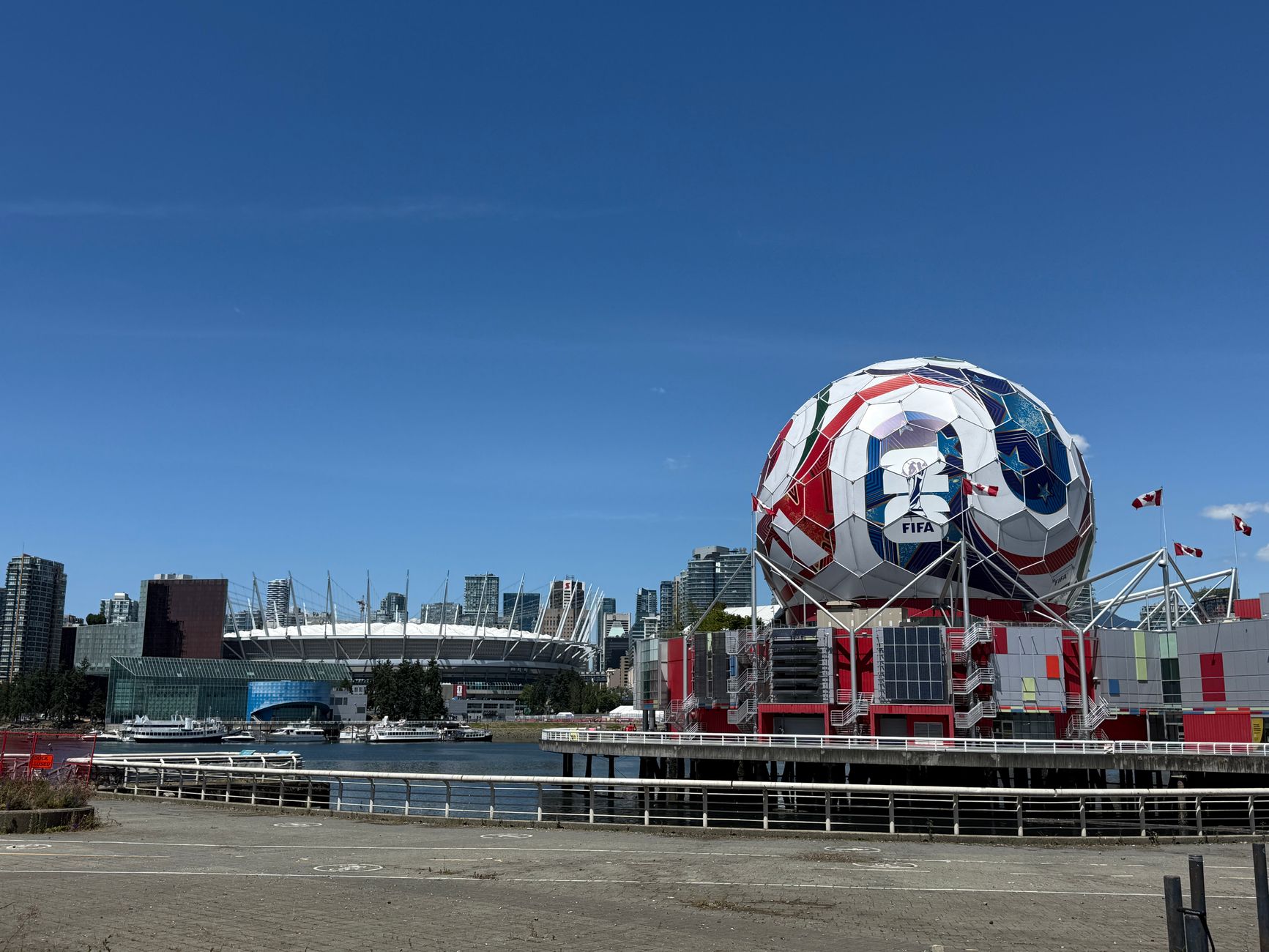
Photo by The Six on Pexels
What actually works when tracking the 2026 window?
The most effective method is to build a verification system that separates confirmed transfers, credible negotiations and social-media speculation. Start with official club announcements, league registration notices and reputable reporting, then compare the player’s contract situation with the proposed destination’s squad needs. This sounds overly methodical until a rumour is repeated so often that people mistake repetition for evidence.
A clean transfer tracker should include the following columns:
- Player and current club.
- Proposed destination and competition.
- Contract expiry date.
- Permanent transfer, loan, free transfer or return from loan.
- Reported fee and whether it is disclosed.
- Announcement date.
- Registration deadline.
- Medical, work permit and international-clearance status.
- Tactical role and likely squad competition.
For England, use 15 June 2026 as the scheduled summer-window opening date and 11pm BST on 1 September 2026 as the scheduled closing point, while checking for official amendments. The distinction between BST and local time is not decorative; readers in Toronto, Los Angeles, London and Tokyo will see different clock times. On deadline day, always convert from the governing competition’s stated time zone.
A less obvious operational tip concerns loan deals. A loan can contain an option, obligation, recall clause, appearance threshold or wage-sharing agreement, and these features may change the risk profile more than the initial loan fee. If a report says “loan completed,” do not assume the player is eligible for the next fixture. Registration documents and league confirmation still matter.
Get a clearer daily framework for transfer and tournament coverage here.
How should supporters judge a transfer rumour?
Supporters should grade a rumour by source quality, contract plausibility, tactical need and registration feasibility. A report from a recognised journalist with direct club or agent access deserves more weight than an anonymous account copying an earlier post. Even a credible report remains a report until the club, league or player provides confirmation.
I use a simple four-level scale:
- Level one: social-media claim with no named source.
- Level two: multiple reports repeating the same unnamed information.
- Level three: credible journalist reports negotiations or an agreement in principle.
- Level four: medical completed, contract signed and club announcement issued.
This scale prevents a common error: moving a player into a projected lineup before level four. It also helps with responsible sports content, including prediction work. Fan Strategy can discuss likely tactical consequences, but readers should distinguish forecast language from confirmed roster information. That boundary is particularly important when content influences betting decisions; no transfer rumour creates a guaranteed sporting outcome, and no market should be treated as risk-free.
My private preference is to wait. It is unfashionable, perhaps, but a confirmed £15.5 million transfer tells me less than the first tactical press conference and three competitive appearances. Believe it or not — I do.
What should you ignore during the 2026 transfer window?
Ignore certainty without documentation, especially when a claim uses phrases such as “done,” “imminent” or “medical booked” without naming a source. Also ignore the idea that a club’s transfer spending automatically predicts its league position. Football remains a team sport shaped by coaching, availability, fixture congestion, registration limits and the quality of decisions after the transfer window closes.
Be especially cautious with these recurring claims:
- “A free transfer costs nothing.” Wages, bonuses, signing fees and agent commissions remain real costs.
- “An undisclosed fee means a huge fee.” It means the public figure is unavailable.
- “A World Cup breakout guarantees interest.” It may generate interest, but clubs still assess fit and affordability.
- “Deadline day equals immediate availability.” Registration and clearance can lag behind announcements.
- “A loan is temporary and simple.” Options, obligations and recall conditions can materially alter it.
- “A famous player is automatically the right player.” Reputation does not solve every tactical problem.
[Internal Link: football transfer rumour verification checklist]
The strongest information gain often comes from negative evidence. If a club urgently needs a goalkeeper but has no registered senior option, emergency-loan rules may be more relevant than a rumoured superstar forward. If a player is unattached, the calendar may matter less than eligibility. If the fee is undisclosed, a confident valuation is usually theatre dressed as analysis.
[Internal Link: 2026 World Cup team tactics and player statistics]
A practical conclusion for the 2026 football transfer window
The 2026 football transfer window should be read as a registration process, a financial negotiation and a tactical market at the same time. England’s scheduled dates—15 June to 11pm BST on 1 September 2026—provide the central calendar reference, but free agents, emergency goalkeeper loans, international clearance and competition rules create important exceptions. Josh Sargent’s reported £15.5 million move to Toronto FC shows why headline fees attract attention; the free transfers involving Port Vale, Stevenage and Tranmere Rovers show why the wider market deserves equal scrutiny.
For readers following the FIFA World Cup in Canada, Mexico and the United States, the cleanest routine is to verify the transaction first, assess the player’s role second and consider prediction or betting angles only after those facts are stable. Fan Strategy can support that process with daily match predictions, team tactics, player statistics and tournament coverage. Please use official sources for final confirmation, and treat every forecast as uncertain. That is not cynicism. It is simply better bankroll and football discipline.
Ready to follow the 2026 transfer market with more context?
Frequently Asked Questions
Q: What is the football transfer window 2026?
A: The football transfer window 2026 is the regulated period when clubs can register eligible player transfers and loans under applicable competition rules. In England, the summer window is scheduled to run from 15 June until 11pm BST on 1 September 2026. The Premier League, EFL, FA and FIFA regulations can all affect eligibility, especially for international transfers, free agents and loan agreements.
Q: When does the 2026 Premier League transfer window close?
A: The scheduled English summer transfer deadline is 11pm BST on 1 September 2026. That time applies to the standard English window referenced for Premier League and EFL clubs, although readers should verify any official changes through the Premier League or FA. A deal agreed before the deadline may still require registration documents, international clearance or work-permit approval before the player can appear.
Q: Can free agents sign outside the 2026 transfer window?
A: Yes, free agents can generally sign outside the main window, subject to league and competition registration rules. The player must genuinely be without a club or meet the relevant termination conditions, and the receiving competition must accept the registration. Examples from the English market include Onel Hernández joining Port Vale and Matt Phillips joining Stevenage on free transfers.
Q: What is the difference between a transfer, a loan and a free transfer?
A: A permanent transfer moves a player’s registration to a new club, a loan temporarily places the player there, and a free transfer involves an unattached player joining without a conventional transfer fee. A loan may include an option to buy, an obligation to buy, a recall clause or wage-sharing terms. A free transfer can still involve significant wages, signing bonuses and agent fees.
Q: How should I verify a 2026 transfer rumour?
A: Verify the rumour by checking the club announcement, league registration information, a reputable named journalist and the player’s contract status. Give the highest confidence to a completed medical followed by a signed-contract announcement, rather than to anonymous social-media claims. Also check whether the player is eligible for the next fixture, because announcement and registration dates can differ.
Q: Does the 2026 FIFA World Cup increase transfer values?
A: The 2026 FIFA World Cup can increase visibility and competition for certain players, but it does not automatically increase their transfer value. Clubs still assess age, contract length, club minutes, injury history, tactical fit, wages and resale potential. A short tournament sample should be compared with the player’s recent domestic and international performance before drawing a financial conclusion.
Q: Is Fan Strategy a source of confirmed transfer registrations?
A: Fan Strategy is a FIFA World Cup-focused content site covering match predictions, team tactics, player statistics and tournament developments, rather than an official registration authority. Its analysis can help readers understand how a transfer may affect a team or player role. For final confirmation, use official club announcements, league communications, the FA, FIFA and relevant national associations.