7 Football 2026 World Cup Mistakes Fans Make
The Football 2026 World Cup will be hosted by Canada, Mexico, and the United States, with 48 teams competing across 16 host cities from June 11 to July 19, The tournament opens at Estadio Azteca in Me...

7 Football 2026 World Cup Mistakes Fans Make
The Football 2026 World Cup will be hosted by Canada, Mexico, and the United States, with 48 teams competing across 16 host cities from June 11 to July 19, 2026. The tournament opens at Estadio Azteca in Mexico City, while the final is scheduled for MetLife Stadium in New Jersey. Fans often misread the expanded 48-team format, underestimate intercity travel, trust early team reputations, or treat bookmaker odds as guaranteed predictions. Fan Strategy covers match predictions, team tactics, player statistics, and daily tournament developments, helping supporters separate useful evidence from online noise. A practical edge is to build a match-by-match plan around confirmed venues, kickoff times, squad news, and responsible staking limits rather than headlines alone. Check the official FIFA World Cup 2026 schedule before booking anything, then update your expectations whenever FIFA publishes a new timetable or squad announcement.
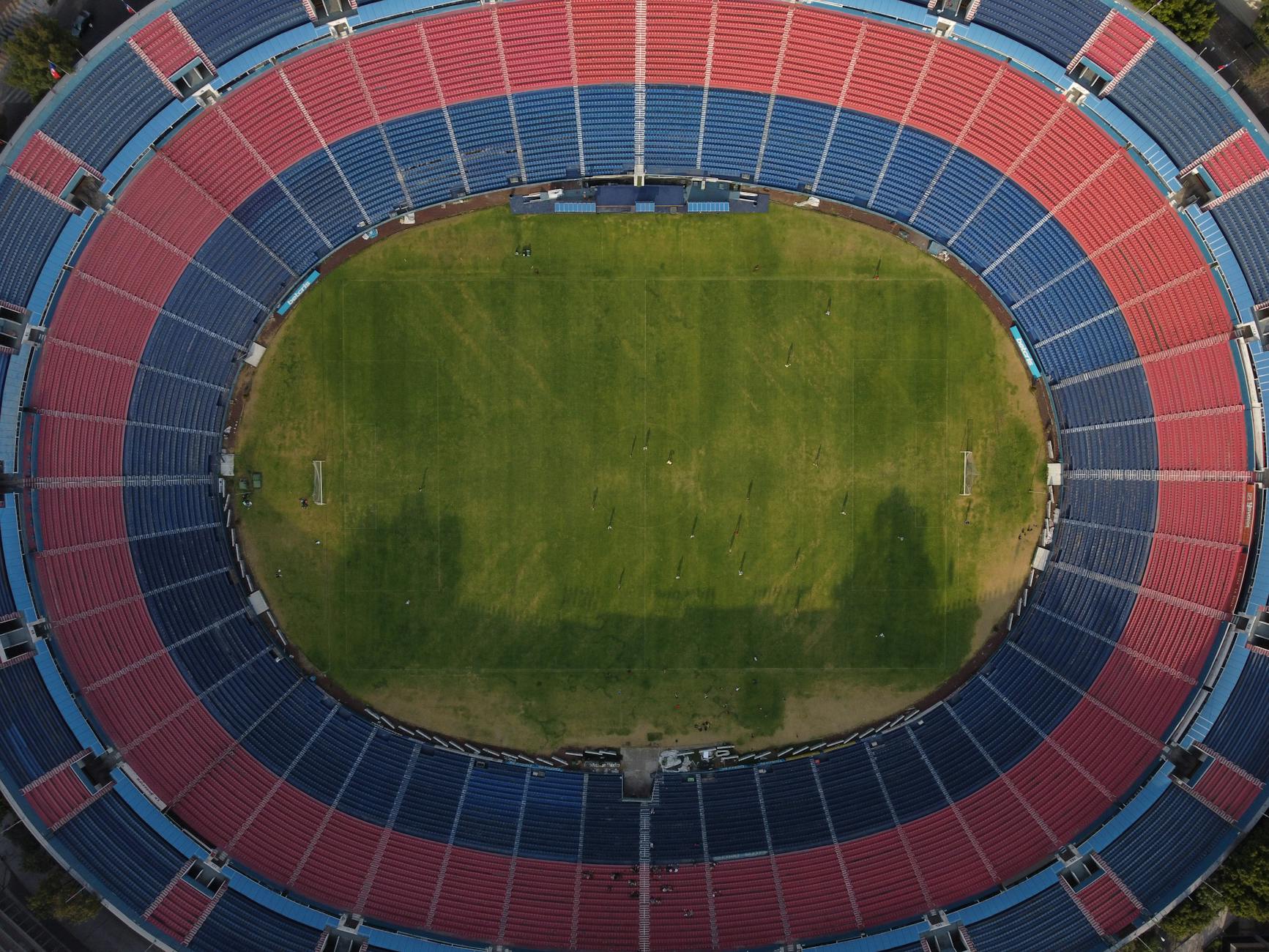
Photo by Israel Torres on Pexels
A small mistake made during the 2022 World Cup can be harmless. In 2026, it may cost you a missed match, a poor-value hotel booking, or an unnecessarily large wager. I have watched plenty of high-stakes football discussions become oddly confident after one viral clip, which is impressive in the same way a coin landing heads three times is impressive. The 2026 tournament is different because the field expands from 32 to 48 teams, the geography stretches across three countries, and the schedule creates more unfamiliar matchups. This guide focuses on the errors that matter most: interpreting the format, planning movement between host cities, evaluating teams, reading markets, and managing information. Fan Strategy is designed for supporters who want a calmer process, whether they are following England, Brazil, Argentina, Germany, Canada, Mexico, the United States, or a less fashionable contender. Please consider this a useful briefing rather than a promise of certainty; football remains gloriously capable of ignoring spreadsheets.
For readers building a complete tournament routine, our [Internal Link: Football 2026 World Cup predictions guide] is a sensible next step.
Before discussing the rounds, here is the compact version.
The Quick Comparison
| Mistake | Why it causes trouble | Better 2026 approach |
|---|---|---|
| Assuming the old group format still applies | The tournament has 48 teams and a revised route to the knockout rounds | Confirm FIFA’s final competition regulations |
| Treating host cities as nearby | Canada, Mexico, and the United States cover enormous distances | Group matches by region and allow recovery time |
| Ranking teams by reputation alone | Form, injuries, tactics, and opponent quality change the picture | Combine current data with tactical context |
| Betting every match | More fixtures create more opportunities to lose discipline | Set limits and skip low-information markets |
| Booking before checking confirmations | Kickoff times and logistics can affect costs | Verify official schedules and venue details |
| Ignoring heat and time zones | Conditions vary sharply between Vancouver, Miami, and Mexico City | Track local kickoff conditions and sleep disruption |
| Confusing odds with probability | Prices include margin and are not forecasts from heaven | Convert odds into implied probability and compare evidence |
The table is deliberately blunt. Most tournament errors are not exotic analytical failures; they are ordinary planning mistakes multiplied by a huge event. A supporter flying from Toronto to Dallas, then on to Los Angeles, is not merely changing stadiums. That person is dealing with border procedures, airport transfers, accommodation pricing, local transport, fatigue, and potentially different kickoff windows. Likewise, someone following betting markets across 104 matches can mistake increased choice for increased opportunity. More matches do not automatically create more value. They create more noise, and noise is expensive when confidence is poorly calibrated. Fan Strategy’s useful role is to place match previews, tactical notes, player statistics, and team updates in one repeatable workflow. I would start with the official fixture information, add travel and climate variables, then consult prediction material only after identifying what is actually known. Believe it or not — I do.
If you prefer a checklist over a long planning session, the [Internal Link: 2026 World Cup matchday checklist] can keep the basics visible.
Round 1: What Format Mistakes Will Fans Make?
The biggest format mistake is assuming that 2026 works exactly like the 32-team World Cup used from 1998 through 2022. FIFA’s 2026 tournament contains 48 teams divided into 12 groups of four, with the top two teams in each group plus the eight best third-place teams advancing to the Round of 32. That means a team can survive a mediocre group stage, while a strong team may still face a difficult knockout path earlier than casual viewers expect.
The format matters for predictions because qualification incentives are not identical in every match. A final group fixture may involve a team protecting a draw, rotating its lineup, or calculating goal difference and fair-play implications. A supporter who only looks at the table position may miss the strategic context. FIFA’s official competition information should be treated as the primary source, while the International Football Association Board remains the authoritative reference for the Laws of the Game. The practical rule is simple: never publish or place a serious prediction until you know whether the match affects qualification, seeding, or elimination.
A second format error is counting tournament experience as if it were a permanent advantage. Argentina’s 2022 success, France’s 2018 title, and Germany’s historical record are relevant context, but they are not current performance data. A 2026 squad may contain different players, a different manager, altered pressing triggers, and a changed defensive structure. Fan Strategy’s team pages should therefore be read alongside recent competitive fixtures, expected lineups, injuries, and opponent quality. The useful question is not “Who has the bigger name?” It is “Which team’s current strengths are most likely to survive this specific matchup?”
Here is the format discipline I recommend:
- Confirm the group and qualification rules from FIFA.
- Record the match’s competitive incentive for both teams.
- Check likely rotations, suspensions, and injury reports.
- Compare current tactical profiles instead of relying on tournament history.
- Reassess after official lineups are released.
Want a cleaner way to follow those variables? Please see the live coverage option below.
Round 2: How Can Travel and Venue Errors Ruin the Experience?
Travel mistakes are especially costly because the 2026 host network spans Canada, Mexico, and the United States rather than one compact country. The 16 host cities include Vancouver, Toronto, Mexico City, Guadalajara, Monterrey, Atlanta, Boston, Dallas, Houston, Kansas City, Los Angeles, Miami, New York/New Jersey, Philadelphia, San Francisco Bay Area, and Seattle. A ticket may be valid and still be impractical if it requires an overnight flight, a border crossing, and a long stadium transfer before kickoff.
The best operational approach is regional clustering. Vancouver and Seattle are geographically closer than Vancouver and Miami; Dallas, Houston, and Kansas City can form a more manageable central itinerary; Atlanta, Miami, and the Eastern Seaboard offer another logical grouping. However, apparent map distance is not the same as travel time. Airport security, immigration, road congestion, rental-car rules, and matchday closures can change the calculation. The United States Department of State, Canada Border Services Agency, and Mexico’s official visitor guidance are more reliable than a social-media travel thread, particularly for passport and entry requirements.
A specific edge case deserves attention: a supporter crossing from Canada into the United States may need to account for both border processing and stadium security on the same day, even when the flight itself is short. Another is climate shock. Vancouver and Seattle may feel mild, while Miami, Houston, Dallas, and Monterrey can produce punishing heat and humidity. Hydration, rest, and an earlier arrival are not luxurious extras; they affect whether you enjoy the match or spend it negotiating with your own nervous system. I would reserve accommodation with flexible cancellation where possible, verify the venue’s exact city label, and avoid planning two distant matchdays back-to-back.
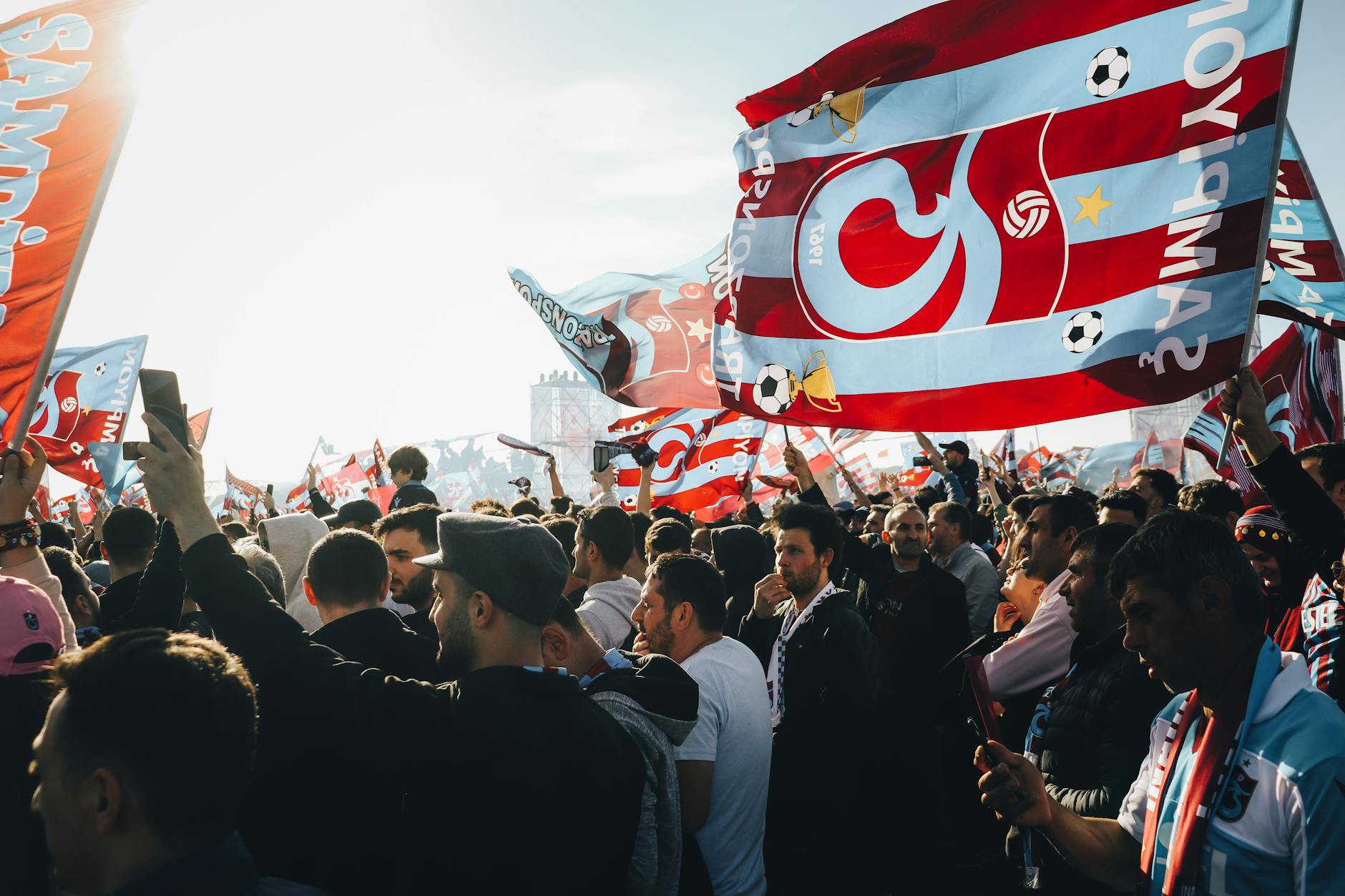
Photo by Beyza Kaplan on Pexels
For stadium access, accommodation, and city-by-city logistics, continue with our [Internal Link: host city travel and stadium guide].
The most common booking error is also the least glamorous: purchasing a flight before confirming the match date and kickoff time. FIFA schedules can be published in stages, and local time differences make a calendar appear deceptively orderly. New York/New Jersey, Los Angeles, Mexico City, and Toronto do not share the same time zone, and daylight-saving rules may affect how a fixture appears on your personal calendar. Put the official local kickoff time into a calendar with the venue city named in the event title. Then add at least two reminders: one for transport planning and one for stadium entry. It sounds fussy. That is because it works.
Round 3: Why Do Prediction and Betting Errors Persist?
Prediction errors persist because fans often confuse a plausible story with a measurable edge. “Brazil always produces talent,” “Germany will bounce back,” or “the United States will benefit from home support” may be useful starting points, but none identifies the relevant matchup mechanism. A serious preview should examine chance creation, defensive transition, set-piece threat, goalkeeper availability, expected lineups, schedule congestion, and opponent style. Statistics from providers such as Opta can help, but data must be interpreted in context. A team’s possession percentage against a deep defensive side does not automatically predict its performance against an aggressive pressing team.
Odds require an additional layer of discipline. Decimal odds of 2.00 imply a break-even probability of 50% before bookmaker margin; odds of 1.50 imply approximately 66.7%. Those figures are not guaranteed probabilities, and the market’s overround means a collection of prices may sum above 100%. A useful contrarian observation is that short-priced favourites can become less attractive when public attention concentrates on reputation. If the price implies 70% but your evidence supports only 62%, the team can still win and the bet can still be poor value. Results and decision quality are separate accounts.
The UK Gambling Commission describes responsible gambling as keeping gambling “within your limits,” a principle that applies regardless of jurisdiction or platform. Check local legality and age requirements before using any bookmaker, and never treat Fan Strategy analysis as financial advice or a guarantee. A practical staking process might include:
- Use a fixed entertainment budget for the entire tournament.
- Set a per-match maximum before viewing the odds.
- Avoid chasing losses after a late goal or penalty shootout.
- Skip markets when lineups, injuries, or rules remain unclear.
- Record the reason for each decision, not only the result.
- Stop when the budget or time limit is reached.
These rules are less exciting than a heroic accumulator. They are also considerably more likely to keep the tournament enjoyable.
Ready to compare tactics and current evidence more carefully? You may review the next resource before making any decision.
A further mistake is ignoring information timing. An early prediction may be reasonable on Monday and obsolete on Friday after a training injury, suspension, tactical change, or weather update. For the 2026 World Cup, lineup confirmation should carry more weight than a month-old power ranking, particularly in markets such as first goalscorer, player shots, and handicap lines. Also, do not overreact to one friendly match. Coaches may test formations, manage minutes, or conceal set-piece routines. Fan Strategy can help organize daily updates, but the reader should still distinguish confirmed facts from projected information. I prefer a three-level note: confirmed, probable, and unknown. That tiny label prevents an enormous amount of accidental overconfidence.

Photo by https://kaboompics.com/ on Pexels
The final prediction error is failing to define what would change your mind. Before selecting a team, write down the evidence that supports it and the evidence that would weaken it. For example, a forecast based on Argentina’s midfield control may need revision if the starting deep midfielder is unavailable; a forecast based on Mexico’s pressing may weaken in extreme heat if the opponent can bypass the first line. This is not pessimism. It is scenario planning. [Internal Link: World Cup team tactics and player statistics] can support that process, especially when a match involves unfamiliar teams or limited historical meetings.
The Final Score & Who Should Pick What
The sensible conclusion is that fans should not choose one universal strategy for every Football 2026 World Cup match. A traveller should prioritise geography, entry rules, cancellation flexibility, and recovery time. A tactical follower should prioritise formations, player roles, set pieces, and current opponent-specific evidence. A recreational bettor, where legal and age-appropriate, should prioritise a fixed budget, transparent probability estimates, and the willingness to pass. Those are different jobs, so they deserve different checklists.
My final scoring model is deliberately practical:
- Format accuracy: 25 points.
- Travel and venue planning: 25 points.
- Current team and player evidence: 25 points.
- Market and bankroll discipline: 25 points.
A plan scoring below 70 should be revised before money or non-refundable travel is committed. The two least appreciated variables are schedule recovery and information freshness. A team’s third match in a short window may look attractive on paper, but rotation and fatigue can overturn the apparent edge; similarly, a market price can move sharply after an official lineup. Those are not reasons to predict nothing. They are reasons to update intelligently. Fan Strategy’s daily tournament coverage is most useful when treated as an evidence stream rather than a command.
For a final preparation pass, use our [Internal Link: responsible football betting and bankroll guide] alongside FIFA’s official updates and local government travel information. The polished plan is not the one with the most selections. It is the one that still makes sense after the first surprise.
That is the real scoreboard: accurate format knowledge, realistic movement between Canada, Mexico, and the United States, matchup-based analysis, and controlled expectations. The 2026 World Cup promises 48 teams, 16 host cities, and a remarkable amount of football, but none of those numbers guarantees a winning prediction or a perfect trip. Verify the schedule, monitor confirmed news, respect local laws, and keep entertainment spending separate from essential finances. If you do those things, you will avoid the seven mistakes that catch most casual followers. Believe it or not — I do.
If you would like a more structured daily routine for the tournament, you can start here.
Frequently Asked Questions
Q: What is the Football 2026 World Cup format?
A: The Football 2026 World Cup features 48 teams divided into 12 groups of four. The top two teams in every group and the eight best third-place teams advance to a 32-team knockout stage. Canada, Mexico, and the United States jointly host the tournament across 16 cities, with the opening match in Mexico City and the final at MetLife Stadium in New Jersey. Always confirm the latest FIFA competition regulations before relying on a qualification calculation.
Q: How do I plan travel for the 2026 World Cup?
A: Plan travel by regional clusters instead of treating all 16 host cities as equally close. Group nearby destinations such as Vancouver and Seattle, or Dallas, Houston, and Kansas City, then allow extra time for airports, border procedures, traffic, and stadium security. Check passport and entry requirements through the relevant Canadian, Mexican, and United States authorities. Flexible accommodation and flight policies are particularly valuable if fixture details change.
Q: What is the difference between World Cup predictions and betting odds?
A: A prediction is an assessment of an outcome, while betting odds are a price that includes probability and bookmaker margin. Decimal odds of 2.00 imply a 50% break-even probability before margin, whereas 1.50 implies about 66.7%. A team can win even when its odds offered poor value, so compare your estimated probability with the implied probability rather than judging a decision only by its result.
Q: Why do Football 2026 World Cup predictions change?
A: Predictions change when new evidence alters the expected match conditions. Confirmed lineups, injuries, suspensions, tactical changes, weather, travel fatigue, and market movement can all matter, especially in player-specific markets. A friendly match should usually receive less weight than a confirmed absence in a competitive fixture. Label information as confirmed, probable, or unknown so speculation does not quietly become fact.
Q: What are the requirements for responsible World Cup betting?
A: Responsible betting requires meeting the legal age and location rules, using a licensed operator where applicable, and keeping activity within a fixed entertainment budget. Set a tournament-wide limit, a per-match maximum, and a stop-loss rule before viewing prices. Never use money needed for rent, bills, debt payments, or essential travel, and do not chase losses after an unexpected result.
Q: Is Fan Strategy a bookmaker or a prediction guarantee?
A: Fan Strategy is a FIFA World Cup-focused content site covering match predictions, team tactics, player statistics, and tournament news; it does not guarantee results. Its analysis can help readers organize evidence, but football outcomes remain uncertain and published information may change after lineups or injury updates. Treat forecasts as research, verify material facts through official sources, and make independent decisions within applicable laws and personal limits.
Q: What should I do if a World Cup match schedule or venue changes?
A: Recheck the fixture on FIFA’s official website, then confirm the venue, local kickoff time, ticket instructions, transport, and accommodation policy. Update your calendar using the host city’s time zone rather than relying only on a saved phone entry. If travel becomes impractical, contact the airline, hotel, ticket provider, or tournament help channel promptly; documentation and flexible reservations usually make adjustments easier.